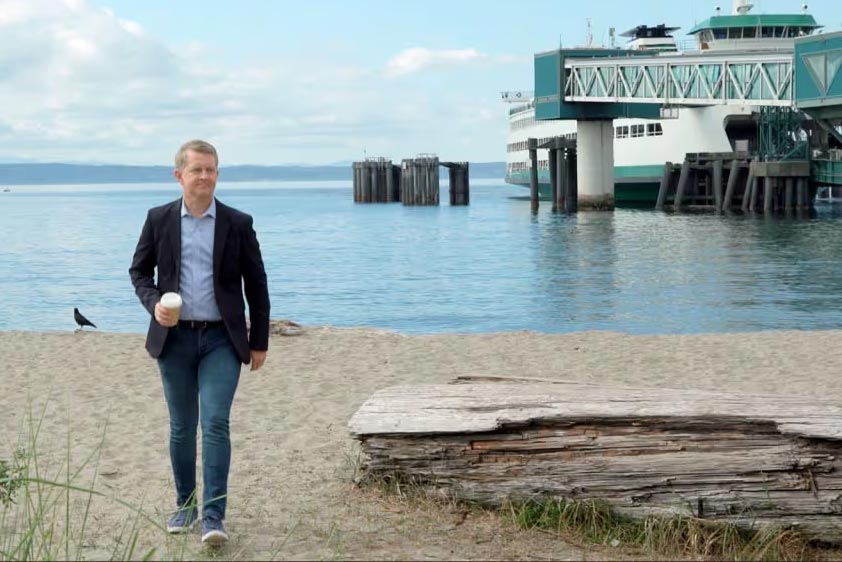
The slab of concrete heard around the world
Every curb cut over which you’ve rolled a suitcase, stroller, or bike began with an act of protest.
In 1962, Ed Roberts became the first student who used a wheelchair at the University of California, Berkeley. Other students with disabilities followed and by the late 1960s, a group of students known as the “Rolling Quads” had begun advocating for greater independence and accessibility on campus.
They were part of a growing Disability Rights Movement taking shape amid the broader civil rights movement, as activists organized against barriers that kept people with disabilities from schools, jobs, transportation, and public life.
At the time, navigating a U.S. city could be a maze of barriers for wheelchair users, who sought out loading docks and driveways to bypass inaccessible curbs, often more than doubling their travel distance.
One evening in the early 1970s, Berkeley student Michael Pachovas and a few friends took matters into their own hands. Frustrated by a city designed with little regard for wheelchair users, they used sledgehammers and chisels to chip away a concrete curb on Telegraph Avenue, pouring cement into the shape of a crude ramp.
“The police threatened to arrest us,” said Pachovas. “But they didn’t.”
In 1972, after pressure from activists, Berkeley installed an official curb cut on Telegraph Avenue. That small slab of concrete became part of a movement that would reshape infrastructure worldwide.
“The arc of the moral universe is long, but it bends toward justice.”
— Martin Luther King Jr.
“You can bend the arc of justice into a ramp.”
— Disability rights advocate Rebecca Cokley
From curb cuts to civil rights
“The city wanted to know why we needed curb cuts: 'We don't see you people out there.' — you know, that Catch-22 thing they do,” said Roberts.
“So they put in the cut, and older adults liked it, and then women pushing baby strollers liked it, and they put in more cuts, and more of us were out there.”
It turns out, when we design for people with disabilities, it makes things more accessible for everyone. According to the CDC, more than one in four U.S. adults (28.7%) reports having a functional disability, and that number only rises with age. And for those people, accessible transit can be the difference between getting to work, school and essential services, or not.
“Mingled
breath and smell
so close
black and white
so near
no room for fear.”
— Subway Rush Hour by Langston Hughes (1951)
When Langston Hughes penned this poem in 1951, schools, neighborhoods, and lunch counters were strictly segregated by law and custom, but the New York subway was one of the few places where "black and white" didn't determine where someone could sit, stand, or where they “mingled.” Hughes had spent decades observing how the crowded subway challenged centuries-old systems of segregation.
Unlike the buses and trains in the South, the New York subway system was not legally segregated from the day it opened. This wasn’t by chance, but the result of advocates who fought tirelessly for the desegregation of the New York streetcars that existed before the subway system. In 1854 — a century before Rosa Parks refused to give up her seat to a white person on a bus — a Black schoolteacher named Elizabeth Jennings Graham was forcibly removed from a Third Avenue streetcar. She sued the company and won. That victory helped lay the groundwork for a city where mass transit would be one of the earliest public systems not formally segregated by law. New York’s state legislature officially outlawed segregation on city streetcars in 1873. And when the New York subway opened in 1904, it did so as one of the first subway systems in America where riders weren’t legally separated by race. That didn’t mean riders were free from discrimination, but there were no "colored only" sections or back-of-the-bus rules underground.
In this virtual visit of the New York State Harlem Art Collection, Carl McCall introduces more than 100 works by predominantly Black and Hispanic artists — spanning the Harlem Renaissance through the Civil Rights and Black Power eras. Highlights include The Subway by Palmer Hayden. Painted in an African-Cubist tradition, shaped by his time in both Paris and Harlem, the work captures urban life in New York and the diversity of the subway itself. Video source: New York State Harlem Art Collection (YouTube).
During the early waves of the Great Migration between 1900 and 1920, millions of Black Southerners fled the poverty wages and state-sanctioned violence of Jim Crow laws and practices. Lured by the promise of safety and opportunity, they funneled their dreams into Northern cities like New York.
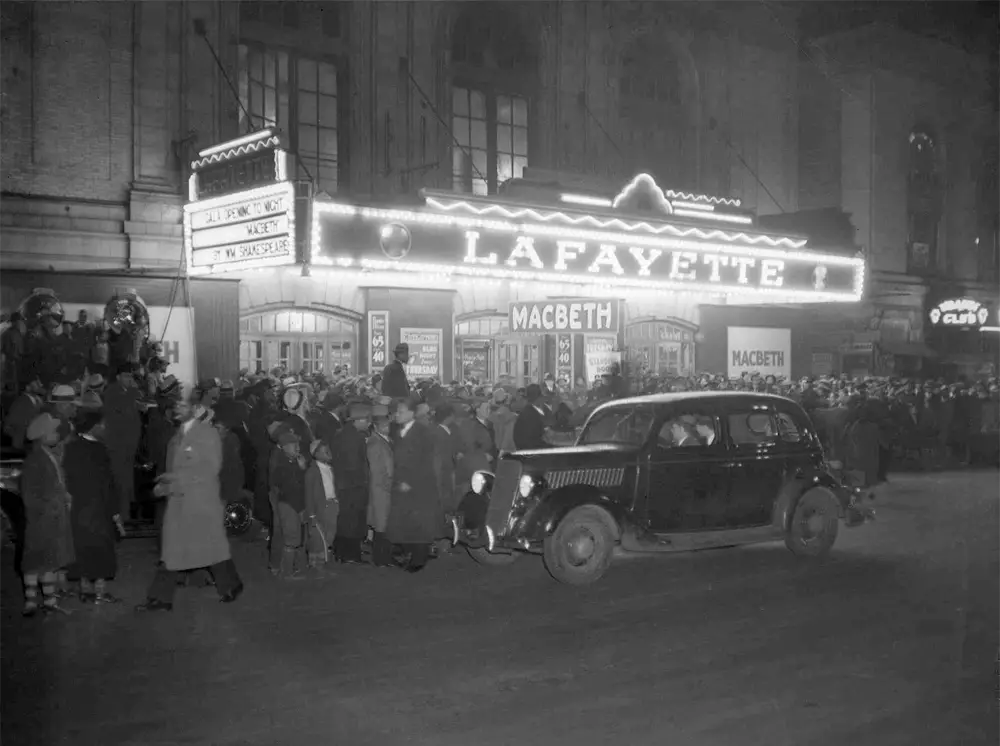
And when they arrived, the subway took them to new opportunities. From 1904 to 1948, New York held the subway fare at just five cents. That nickel fare acted as a powerful public investment — helping fuel the Harlem Renaissance and showing how subsidized transit can drive economic and cultural growth. To hold down costs and expand service, the city eventually built the nation’s first fully city-owned and operated transit line.
“He (Duke Ellington) gave me a set of directions to get to his house by subway. The directions began: ‘Take the A Train.’”
— Billy Strayhorn, Composer of Take the “A” Train
By keeping the fare at a single coin for decades, the city ensured that even the lowest-paid workers had access to the entire city. The subway took Black workers from the train yards to the Apollo Theater, the seamstress from her sewing machine to the Savoy Ballroom, and the library clerk to the jazz clubs of 133rd Street.
This transit network helped funnel Black professionals and creators into a hub of creativity. Billy Strayhorn’s most-famous composition, Take the A Train, was inspired by the subway directions Duke Ellington gave him to get to his house in Harlem.
Ella Fitzgerald sings “Take the A Train” with Oscar Peterson live at the Olympia in Paris in 1963. Musician Billy Strayhorn wrote the lyrics in 1939 based on the directions Duke Ellington gave him to get to his house in Harlem. The A train, a subway line that began serving Harlem in New York in 1932, served as a cultural artery of the Harlem Renaissance. Today, it is the longest route in the New York City subway system, stretching over 30 miles from the very top of Manhattan all the way down to the Rockaways in Queens.
Artists like Jacob Lawrence and Palmer Hayden took the subway from their manual labor jobs to Harlem, where they created some of the most iconic pieces of the movement. People of all races and cultures took the subway to Harlem to experience the cultural revolution that continues to shape music and art to this day.
Today, you’ll still hear the legacy of the Harlem Renaissance when you turn on the radio, read a book, or visit an art museum. The Smithsonian notes that the Harlem Renaissance inspired and influenced future generations of Black artists and intellectuals — and that impact still shapes American culture today.
Just as a five-cent fare once fueled a revolution in Harlem, local communities across the nation continue to invest in transit, keeping fares for individuals lower than the actual cost to ride. That's true here in Snohomish County where bus and light rail service continue to expand — making transit services more frequent and efficient. These transit investments remove the barriers of cost and distance for many people, helping creativity and commerce flourish.
The hidden map: How redlining shaped our communities
History shows that access to transportation often reflects deeper systems of power that decide who belongs, where investments are made, and who is left out. Transit can either be a bridge to opportunity or a wall that maintains exclusion. While the A Train helped the culture of Harlem flourish, policies like redlining and exclusionary zoning were designed to create barriers for certain groups of people.
In the 1930s, the federal government created “Residential Security Maps,” ranking neighborhoods from Grade A (Best/Green) to Grade D (Hazardous/Red). This practice became known as redlining. It was used to deny loans, services, and investment to neighborhoods marked in red.
Segregated by Design — a Silkworm Studio film narrated by Richard Rothstein — shows how redlining and other housing policies didn’t just reflect segregation, they helped build it into the layout of American cities.
Banks and governments used these rankings to determine where they would invest and where they would not. Redlining and discriminatory lending practices denied many people of color access to federally backed home loans and mortgage programs, including benefits available through the GI Bill that helped many white families build wealth after World War II. For most U.S. middle-class households, homeownership (specifically home equity) is typically the biggest source of wealth. The ripple effects of this loss of generational wealth are still felt today.
When communities were redlined, they were often skipped over in future infrastructure decisions. Sidewalks, street lighting, public amenities, and reliable transit service were treated as optional, not essential. Over time, that disinvestment often lowered property values and shrank local tax revenue, leaving fewer resources for schools, streets, and transit.
In Snohomish County and Seattle, these same systems were used to shape our current landscape. Neighborhoods in the Pacific Northwest were often designed to be unreachable by anything except a private car.
Until recent zoning changes took effect, 75% of Seattle remained zoned for single-family homes, a legacy that intentionally limited the housing density needed to support frequent, modern transit. When Seattle urban planner Harlan Bartholomew designed Seattle’s zoning in 1923, he saw zoning as a tool to prevent movement into “finer residential districts…by colored people.” Single-family zoning and underinvestment in transit left many redlined communities cut off from jobs and opportunities.
In Snohomish County, developers wrote racial bans into the initial deeds of nearly 7,000 properties. These properties were concentrated near the rapidly growing corridors that eventually became our region’s primary highways and transit hubs. These covenants didn’t just shape who could buy a home, they shaped who could afford to remain in these neighborhoods as property values rose. By the time the covenants were outlawed in 1968, the physical footprint of our cities was firmly established, leaving redlined communities in areas with fewer sidewalks, longer bus wait times, less connection to high-capacity rail, and lower property values.
“My ‘hood’ is idyllic, except for one thing…. Pick up and move our Black neighborhood of doctors, teachers, police officers and small-business owners just 20 miles west to a White subdivision with a similar economic makeup, and our homes would easily be worth 40 percent more. This is true for other Black communities across the country, where homes can be undervalued by as much as 65 percent.”
— Columnist Michelle Singletary shares how the legacy of redlining continues to affect property values for people like her in the United States
This is the legacy of systemic racism created by government policy. It still affects how people move, work, and connect. For public transit agencies, creating change means intentionally investing in access. Community Transit is working to do that by prioritizing frequent service, affordable fares, and improved connections in communities that have historically been left out of transportation planning.
The Civil Rights Movement & Transit
While redlining and other housing policies shaped opportunity in cities across the country, Jim Crow laws in the South enforced segregation in daily life. One of the first battlegrounds of the Civil Rights Movement was the bus.
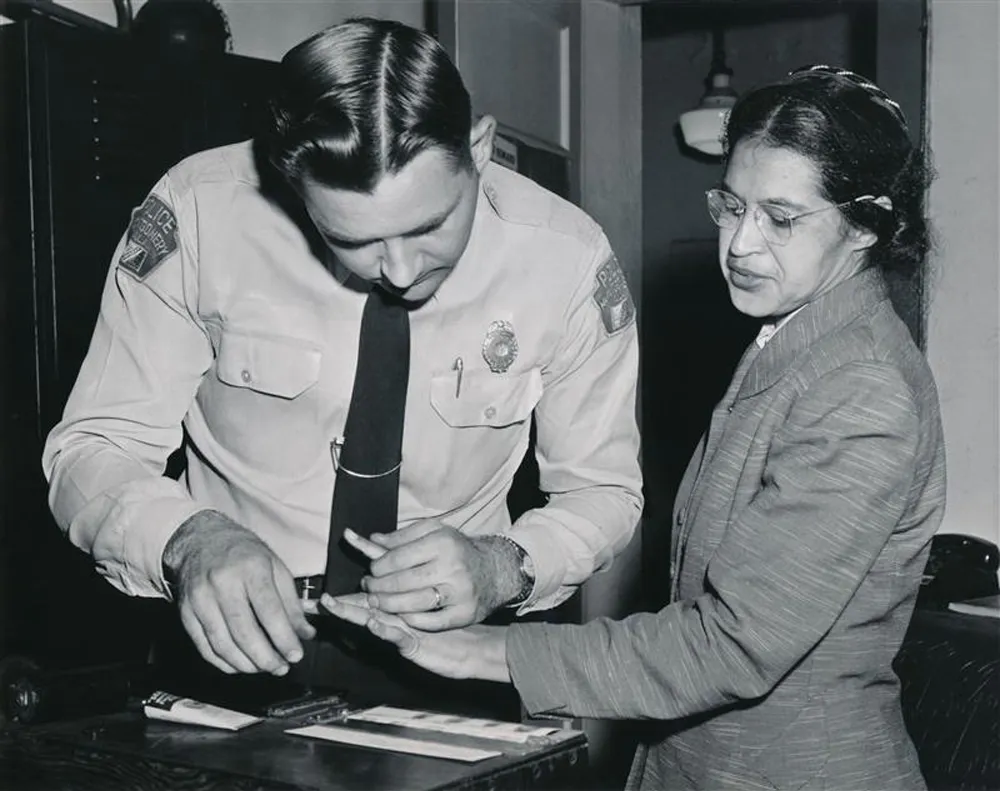
On Dec. 1, 1955, Rosa Parks was arrested after refusing to give up her seat to a white passenger on a Montgomery, Alabama bus. Her case helped ignite the Montgomery Bus Boycott, a 381-day protest that thrust Dr. Martin Luther King Jr. into the national spotlight and became a defining moment in the Civil Rights Movement.
“People always say that I didn’t give up my seat because I was tired…” said Parks in her book My Story. “No, the only tired I was, was tired of giving in.”
The boycott ended after the U.S. Supreme Court upheld a ruling that bus segregation was unconstitutional. But the legal decision that ended bus segregation didn’t come from Parks’ case. It came from Browder v. Gayle (1956) — a separate lawsuit led by four Black women who had also faced discrimination on Montgomery buses: Aurelia Browder, Susie McDonald, Claudette Colvin, and Mary Louise Smith. Two of them, Colvin and Smith, were arrested before Parks.
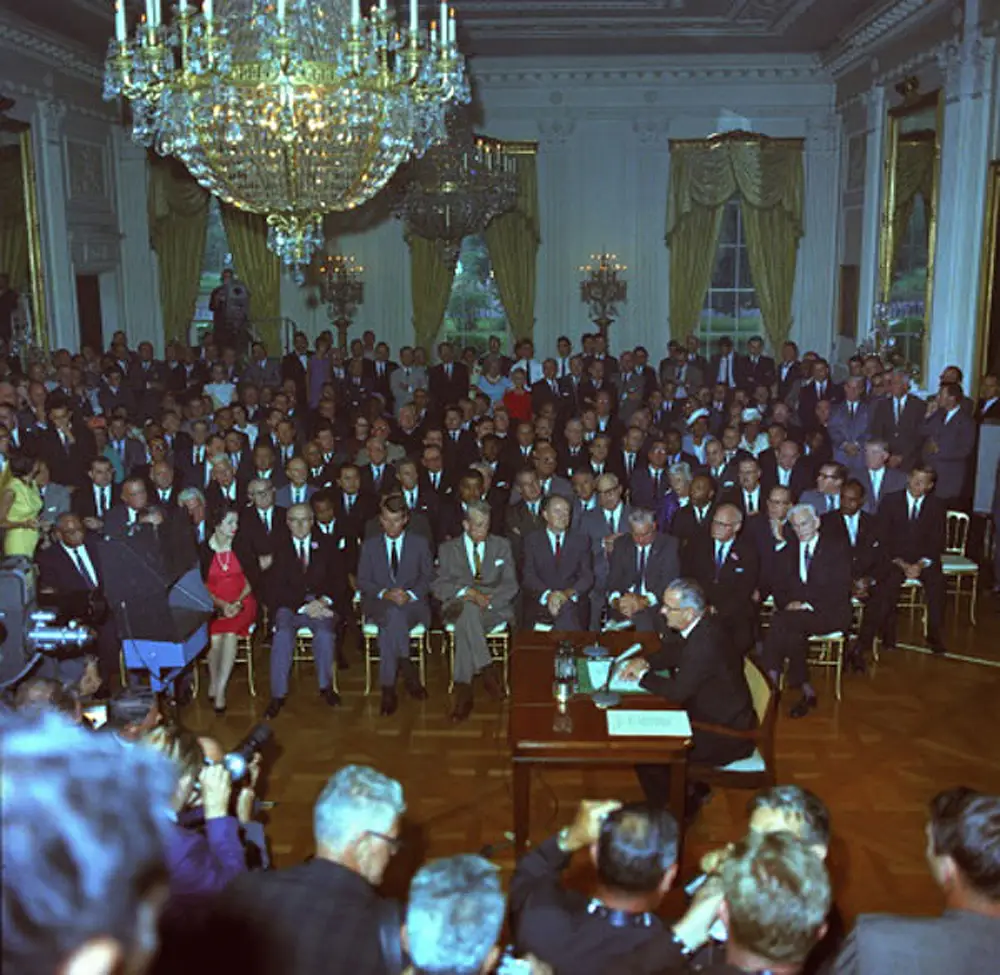
Thanks to the tireless work of many Civil Rights activists, President Kennedy proposed major civil rights legislation in 1963, arguing that public funds should not support discrimination. Congress passed the Civil Rights Act of 1964, including Title VI, which made it illegal for any federally funded program, including public transit, to discriminate based on race, color or national origin.
From the back of the bus to ‘where’s the bus?’
While we often remember transit’s role in the Civil Rights Movement being about where people sat, Martin Luther King Jr.’s later work focused on where the buses went. He argued that even if you could sit anywhere, it didn't matter if the bus didn't take you to where the jobs were.
“Urban transit systems in most American cities... have become a genuine civil rights issue — and a valid one — because the layout of rapid-transit systems determines the accessibility of jobs to the black community. If transportation systems in American cities could be laid out so as to provide an opportunity for poor people to get meaningful employment, then they could begin to move into the mainstream of American life. A good example of this problem is my home city of Atlanta, where the rapid-transit system has been laid out for the convenience of the white upper-middle-class suburbanites who commute to their jobs downtown. The system has virtually no consideration for connecting the poor people with their jobs.”
— Martin Luther King, Jr., A Testament of Hope, essay published posthumously, January, 1969
The legacy of the Civil Rights Movement and of systemic racism continues to shape our world as transportation access remains deeply tied to opportunity.
Civil rights attorney Leslie Proll, former Director of the U.S. Department of Transportation’s Office of Civil Rights, says the focus of civil rights shifted from ‘the back of the bus’ to ‘where’s the bus?’”
"Transportation is not just about getting from point A to point B,” says Proll. “It is the linchpin to jobs, to quality education, to affordable housing, to decent healthcare, and to clean and safe environments."
Research shows inequities in service and a lack of access to transportation often fall hardest on people of color, low-income households, older adults, and people with disabilities. Economic studies also show that better transit connections can boost employment and local income, particularly when improvements expand access to reliable service and job centers.
And in education, research on student transit support programs shows that reducing transportation barriers can improve academic outcomes for community college students — especially those balancing work and family demands.
In Snohomish County, where many neighborhoods were built for cars with long distances between residential areas and other destinations, reliable transit access can be the difference between holding a job, reaching school, or accessing medical care. This is why agencies like Community Transit are prioritizing frequency, affordability, and stronger connections in communities that have historically been left out of transportation investment and planning.
The dignity of design: Moving our region forward
As we learn more about the connection between our past and the world we live in today, we can build a more equitable future for everyone. Across Snohomish County and Washington, we’re using state investment from Move Ahead Washington and the Climate Commitment Act to strengthen mobility — especially in communities that have been underserved for decades. This funding supports more frequent, reliable transit where it’s needed most. It also helps remove barriers that have limited who can use transit and who can benefit from it.
Creating opportunity also means cost can’t be the gatekeeper of mobility. Programs like Free Youth Transit and reduced fares for qualifying riders help ensure travel for people isn’t limited by income. Fare-free programs can increase ridership and reduce barriers to opportunity — with the biggest equity and economic gains seen when free fares are paired with frequent, reliable service. By ensuring our system is both accessible and frequent, we are building more than a network of buses and trains, but a region where everyone has the power to reach their full potential.
The Transit Effect: Learn more
Community Transit’s future plans include a more connected region where more people have easier access to reliable, frequent transit. Want to see the transit effect in action? Ride with us and watch the full series to learn more.
Stay tuned for upcoming episodes and learn about public transit’s role in healthy choices, savings, accessibility, and beyond. Subscribe and share your thoughts on our YouTube channel.